

Quels sont les enjeux des entreprises face à la conduite de projets agiles ?
L’évolution des pratiques de gestion de projets informatiques, de l’approche traditionnelle à l’essor de l’agilité, reflète la recherche croissante de flexibilité et d’efficacité. L’adoption de l’agilité a entraîné un changement de paradigme vers la collaboration, la réactivité et la livraison itérative. Bien que bénéfique pour les entreprises en termes de prise de décision de gestion des ressources, cette transformation présente des défis tels que la coordination des parties prenantes et l’estimation précise des coûts dans un environnement en constante évolution.
De la rigidité à l’agilité…
Historiquement, la gestion de projets informatiques était souvent empreinte de méthodologies rigides, où les étapes étaient prédéfinies et les plans de projets élaborés dans le détail dès le départ.
Cependant, au fur et à mesure que les environnements technologiques devenaient plus complexes et que les besoins des utilisateurs évoluaient rapidement, il est devenu évident que les approches traditionnelles ne suffisaient plus à garantir le succès des projets.
👉 👉 👉 C’est ainsi qu’est née l’approche agile, une réponse aux défis posés par la rapidité des changements dans les projets technologiques. 👈 👈 👈
Pour être le meilleur, il faut être le plus rapide
L’agilité a apporté un changement de paradigme, en valorisant la flexibilité, la collaboration et l’adaptabilité. Elle encourage la création d’équipes multifonctionnelles et autonomes, travaillant par itérations courtes et centrées sur la livraison de valeur continue 💎. Cette approche a permis aux dirigeants de voir des avantages concrets rapidement, d’identifier les problèmes plus tôt et de s’adapter plus efficacement aux changements de marché et aux nouvelles opportunités.
Les bénéfices des méthodes agiles sont multiples. Tout d’abord, l’agilité prend toute son essence en :
- favorisant une communication transparente entre les personnes,
- offrant une visibilité accrue sur l’état du projet,
- permettant de prendre des décisions en étant mieux informés.
De plus, la nature itérative des méthodes agiles permet aux chefs de projet de réajuster constamment les priorités et les ressources en fonction des besoins actuels. Cette flexibilité a pour objectif de générer un réel un avantage stratégique ♟️en répondant rapidement aux évolutions du marché, tout en minimisant les risques liés aux investissements à long terme.
Vous êtes intéressés par vous faire accompagner par un cabinet de conseil it spécialisé dans la conduite de projets informatiques en mode agile ? Vous avez entamé une transformation digitale et recherchez des consultants prêts à vous épauler ? Parlez-nous de votre projet ✉️
La gestion de projet sous l’égide de la méthode agile n’est pas non plus synonyme de long fleuve tranquille. Des enjeux variés sont à relever. L’idéal quand on se lance dans ce type de transformation digitale reste toujours de se faire accompagner par un cabinet spécialisé dans les projets agiles.
Les enjeux liés à la conduite de projets avec les méthodes agiles
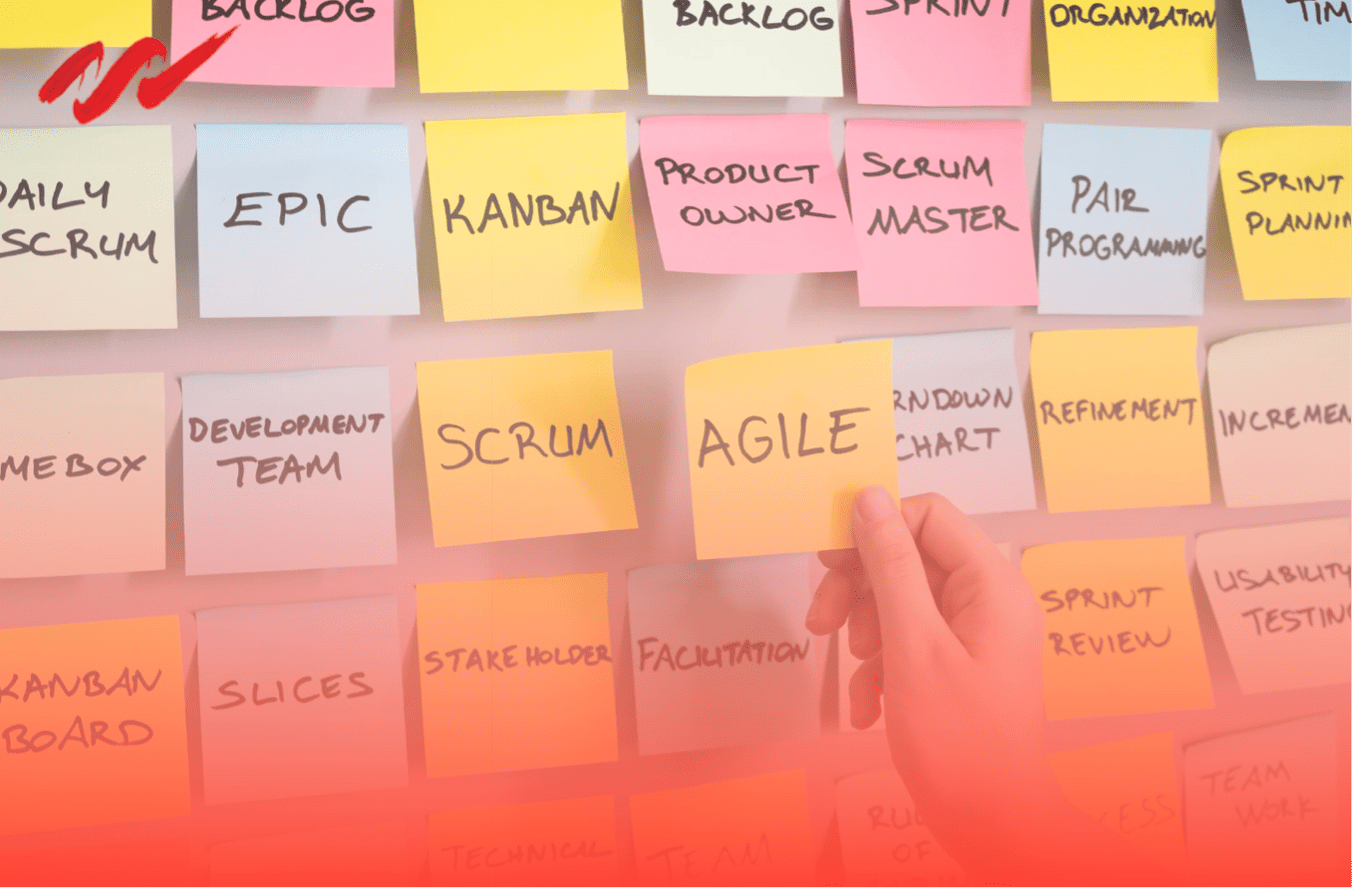
Être celui qui va apporter la plus importante valeur ajoutée en premier @akinbostanci
Les entreprises qui conduisent des projets informatiques agiles font face à plusieurs problématiques spécifiques liées à cette approche de gestion de projet. Voici quelques-uns des défis les plus couramment rencontrés par les équipes :
Naviguer avec habileté à l’ère de la transformation agile
Environ 71% des organisations qui travaillent avec la méthode agile ont identifié la flexibilité comme l’un des principaux avantages de l’agilité.
🟨 Comment faire pour gagner en flexibilité dans vos projets agiles ?
- Mettez en place des processus de gestion du changement solides pour gérer efficacement les modifications de portée ou de priorité.
- Planifiez des réunions régulières de suivi pour évaluer les changements proposés et leur impact sur les départements, les métiers, les ressources, les utilisateurs.
La communication et la collaboration avec des outils technologiques
Les projets avec une mauvaise communication entre les membres des équipes sont 7 fois plus susceptibles de connaître des échecs.
🟩 Comment faire pour performer dans la communication grâce aux outils technologiques ?
Utilisez les bons outils de collaboration en ligne pour faciliter la communication au sein de l’équipe et avec les parties prenantes externes. Un outil non utilisé ou non adopté par l’équipe vous fera perdre en efficacité. Choisissez l’outil qui facilitera la collaboration et non qui la freinera.
Comme précédemment, organisez des réunions régulières pour réaligner en continu les objectifs et résoudre rapidement les problèmes.
Des collaborateurs engagés et mobilisés
49% des projets en échecs sont dus à un manque d’implication des parties prenantes.
🟧 Comment faire pour que les personnes se sentent impliquées dans le projet ?
Identifiez les parties prenantes clés dès le début et maintenez un engagement continu en les impliquant dans chaque étape du projet : la planification, les revues et les décisions importantes.
Pour mettre toutes les chances de votre côté pour favoriser l’implication, voici quelques astuces efficaces :
- Partagez une vision, des objectifs et des attentes claires avec tous les membres de l’équipe.
- Assurez-vous de vive voix que chacun ait compris son rôle et sa contribution.
- Impliquez les personnes dès les premières étapes du projet, cela leur donnera un sentiment d’appartenance et d’influence sur la direction du projet.
- Célébrez les réalisations et les contributions des individus.
- Prêtez une oreille attentive aux préoccupations et aux suggestions des personnes investies.
- Faites des feedbacks réguliers. Cela aide les personnes à suivre leurs progrès et à s’adapter en conséquence.
Une planification itérative
68% des entreprises agiles estiment que la planification itérative améliore la prédictibilité des projets.
🟦 Sur quels outils s’appuyer pour faire simplement de la planification itérative ?
Utilisez des outils agiles tels que le tableau de suivi Scrum ou les méthodes Kanban pour visualiser les tâches et les itérations (exemple le logiciel en ligne Trello). Assurez-vous que chaque itération a des objectifs clairs et mesurables.
Les dépassements budgétaires
Environ 60% des projets agiles connaissent des dépassements budgétaires.
🟫 Quels outils participent à amoindrir les excès de budget ?
Utilisez des techniques d’estimation adaptées à l’agilité, comme le poker planning 🃏.
Intégrez systématiquement des marges de sécurité dans les estimations pour tenir compte des incertitudes, qui seront inévitables.
Gérer les risques
36% des projets agiles échouent en raison de la gestion inefficace des risques.
🟦 Quel document faut-il établir dès le début du projet pour minimiser les risques ?
Mettez en place une analyse continue des risques à chaque itération.
Identifiez les risques potentiels en créant à chaque lancement de projet complexe, une Matrice des Risques. Ce tableau centralise, pour chaque risque identifié, la probabilité d’occurrence et leur degré d’impact sur le reste du projet. Enfin, en face de chaque risque observé, préparez en avance des plans d’atténuation pour minimiser leur impact.
Les cabinets de conseil it sont de précieux partenaires pour piloter avec succès les risques des gros projets it.
Suivre et mesurer le progrès
52% des entreprises agiles ont du mal à mesurer 📏 correctement les progrès.
🟥 Comment suivre efficacement les progrès sur les projets ?

Quelles sont les meilleures méthodes pour surveiller de manière productive l’avancement des projets @GettyImages
Dès le lancement du projet, définissez des indicateurs clés de performance (KPI) pertinents pour mesurer la qualité, la vélocité et l’efficacité de l’équipe. Utilisez des tableaux de bord simples et pas trop chargés, pour suivre ces KPI de manière transparente.
Ces KPI seront source de motivation et éclairciront la communication au regard des objectifs visés.
Former et faciliter l’adoption
Seulement 44% des équipes agiles reçoivent une formation adéquate.
🟨 Quel plan de formation mettre en place ?
Investissez dans la formation de votre équipe sur les principes et les pratiques agiles.
Donnez leur accès en continu à une bibliothèque de contenu (vidéos, livres blancs, références…) pour aider les membres à développer leurs compétences.
👉 👉 👉 Après avoir parcouru ces multiples enjeux il est important de garder à l’esprit que l’agilité est avant tout une valeur mettant en avant l’humain. 👈 👈 👈
La culture d’entreprise joue un rôle crucial dans la performance des équipes. Elle englobe les valeurs, l’identité et les habitudes propres à chaque organisation. Façonnant la manière de travailler des salariés, elle est un élément essentiel 🌱 différenciant les entreprises et les menant vers un haut niveau de succès.